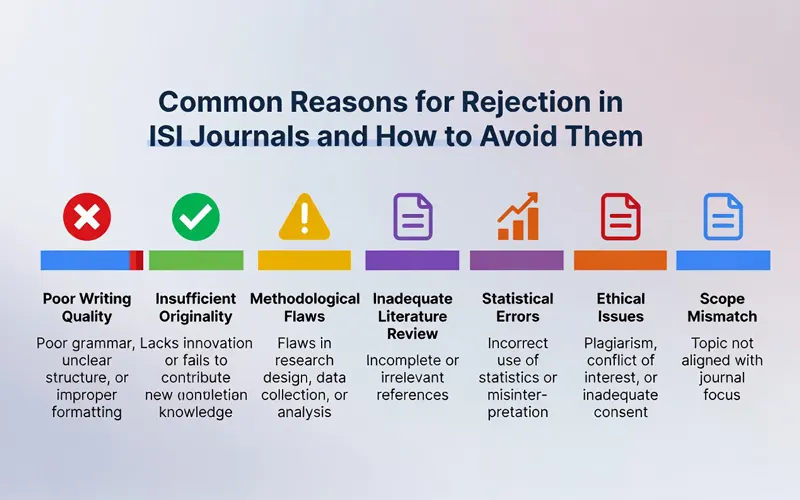
Understanding Why Manuscripts Are Rejected
Submitting a paper, article, or manuscript to an ISI Web of Science journal can be a high-stakes process. Even high-quality research can face rejection if certain critical factors are overlooked.
At TadbirSaz Institute, we have over 20 years of experience in guiding manuscripts to guaranteed acceptance and publication in SCI, SSCI, AHCI, and ESCI journals. By leveraging our knowledge of journal scopes, reviewer preferences, and editorial processes, we help researchers avoid common pitfalls and enhance their chances for online publication.
1. Scope Mismatch
One of the most common reasons for rejection is submitting a manuscript outside the journal’s focus area.
TadbirSaz carefully selects journals where we have successfully published multiple papers.
We define manuscript topics to perfectly align with the journal scope, trending research areas, and editors’ expectations.
This strategic alignment increases acceptance probability, even in high-impact Q1 journals.
2. Weak Research Methodology
Journals demand rigorous methodology and data integrity. Manuscripts with flaws in design, sampling, or analysis are often rejected.
TadbirSaz collaborates with top international researchers (h-index >50) to strengthen methodology.
We ensure statistical analyses, experimental design, and data presentation meet the highest standards.
By enhancing methodological quality, your paper becomes credible and publication-ready.
3. Poor Language and Formatting
Even well-researched manuscripts can be rejected due to language errors or incorrect formatting.
TadbirSaz provides professional English editing, formatting, and structuring services.
References, tables, and figures are prepared according to journal-specific guidelines.
This ensures your manuscript is polished and ready for peer review, increasing chances of acceptance.
4. Lack of Novelty or Originality
Editors look for original contributions that advance knowledge. Manuscripts that replicate previous work or lack innovation are often declined.
TadbirSaz identifies trending and relevant research topics in each ISI index (SCI, SSCI, AHCI, ESCI).
We collaborate with experienced scholars to highlight the novelty and significance of your research.
This guarantees that your paper meets the criteria for high-impact publication.
5. Data Presentation Issues
Clarity in presenting results is critical. Poorly organized tables, unclear figures, or incomplete data can lead to rejection.
TadbirSaz ensures all visuals and data are clear, well-structured, and formatted according to the journal’s guidelines.
Each paper or manuscript is optimized to meet editorial and reviewer expectations.
TadbirSaz’s Proven Strategies to Avoid Rejection
Target Journals Strategically – Only journals with proven track records of success.
Collaborate with Leading Experts – Enhance credibility and methodology.
Professional Manuscript Editing – English language, formatting, and structuring.
Align with Journal Scope – Topic selection and trend analysis for SCI, SSCI, AHCI, ESCI.
Proprietary Techniques – Confidential strategies refined over two decades to secure acceptance.
Our unique approach ensures guaranteed acceptance and online publication, even in highly selective journals. Notably, 90% of project fees are only charged after final acceptance, reflecting confidence in our results.
Conclusion
Understanding common reasons for rejection is essential for researchers aiming to publish in ISI journals.
With TadbirSaz Institute, your manuscript or paper is carefully prepared, strategically submitted, and guided through the entire review process. By avoiding scope mismatches, enhancing methodology, and leveraging top experts, we make high-impact ISI publication not only achievable but guaranteed.